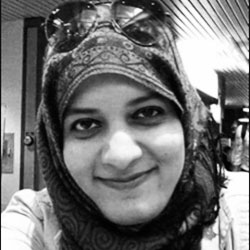
Desde Pakistán
Traducido por Eric Koechlin
Pakistán es un país de múltiples etnias y culturas. El ratio hombre-mujer en la población es del 49 y el 51 por ciento. Los derechos de las mujeres son uno de los principales problemas en Pakistán, al igual que la libertad de expresión. Pakistán es una sociedad patriarcal que tiene sus propias normas para todo, como matrimonios, las interacciones sociales, la educación y la vida cotidiana.
Crecí como la niña más joven de una familia de clase media. Vi el mundo a mi manera, que era mucho más amplia que la mayoría de las mujeres en Pakistán. Vemos algunas tradiciones inusuales en nuestra sociedad rural, tales como los crímenes de honor y los matrimonios forzados. Siempre me preguntaba que por un lado, estamos compitiendo con el mundo moderno, pero por otro lado, cuando se trata de derechos de las mujeres en Pakistán, todavía vivimos en la edad de piedra.
Por otro lado, por el paso del tiempo, empecé a ver la otra cara de la moneda también. Vi a la mujer con "voz", "poder" y "respeto". Dos años atrás, el empleado mejor pagado de Pakistán fue la cabeza de Unilever Pakistán, que es en realidad una mujer, Musharraf Hai. Obtuvo más de 5.000 dólares al mes, que es una escala salarial muy alta en Pakistán. Yo personalmente estoy de acuerdo con el hecho de que las mujeres son reprimidas en nuestra sociedad, pero en contraste, también puedo decir que las mujeres pakistaníes son muy talentosas y cada vez que tienen la oportunidad de demostrar su valor siempre hacen el mejor trabajo. Tres años atrás, una chica, Arfa Karim, quien tenía 16 años, murió de hemorragia cerebral, siendo la experto certificado de la Microsoft (Microsoft Certified Expert) más joven del mundo. Pasó el examen a la edad de 9 años y 11 meses. Bill Gates personalmente la invitó a Estados Unidos, la conoció y también le ofreció un equipo de médicos y una ambulancia aérea cuando estaba en el hospital. Estos son los pocos ejemplos de mujeres que desempeñaron una gran labor en sus campos y se les conoce como modelos a seguir.
Cuando tuve la oportunidad de venir a los Estados Unidos con una beca Fulbright, incluso tuve una gran competencia a tratar. Yo era una de las dos mujeres que seleccionaron para esta oportunidad. Fue una gran oportunidad para mí servir como embajadora cultural en los Estados Unidos al dar presentaciones en las comunidades y, a veces tenía extrañas preguntas sobre la supresión de las mujeres en Pakistán. Respondí a esas preguntas estereotipadas con estos y otros ejemplos brillantes de mi país, que las personas no eran conscientes, debido a la imagen negativa de los medios de comunicación.
Yo creo que si se presenta todo de una manera equilibrada, se le dará a la gente una reflexión equilibrada sobre todos los aspectos de un país.
Pakistani Women and Modern Era
Pakistan is a country of multi ethnicity and cultures. The male female ratio in the population is 49 and 51 percent. Women rights are one of major issues in Pakistan, just like freedom of speech. Pakistan being a patriarchal society has its own norms for everything like marriages, social interactions, education and everyday life.
I grew up as a youngest kid of a middle class family. I saw the world in my own way, which was a lot broader and better than the majority of the females in Pakistan. We see some unusual traditions in our rural society such as, honor killing and forced marriages. I always used to wonder that on one hand, we are competing with the modern world but on the other hand, when it comes to women’s rights in Pakistan, we still live in the stone age.
On the other hand, by the passage of time, I started to see the other side of the picture as well. I saw women with “voice”, “power” and “respect”. 2 years back, the highest paid employee of Pakistan was the country head of Unilever Pakistan who was actually a woman, Musharraf Hai. She earned more than 5000 dollars per month, which is a really high pay scale in Pakistan. I personally agree with the fact that women are suppressed in our society but in contrast, I also know that Pakistani women are highly talented and whenever they got a chance to prove themselves, they always did the best job. 3 years back, a girl, Arfa karim, who was 16, died of brain hemorrhage, was world’s youngest Microsoft Certified Expert. She passed the exam at the age of 9 years and 11 months. Bill Gates personally invited her to US and he met her and he also offered a team of doctors and an air ambulance when she was in the hospital. These are the few examples of women who did really well in their fields and they are known as role models.
When I got a chance to come to US on a Fulbright scholarship, even I had a huge competition to deal with. I was one of two women who got selected for this precious opportunity from the country, which has 200 million of population. It was a great opportunity for me to serve as a cultural ambassador in US. I gave presentations in the community and sometimes had strange questions about suppression of women in Pakistan. I answered those stereotyped questions with these and other bright examples from my country, which people were not aware of, because of the negative portrayal of media.
I believe that if we present everything in a balanced way, it will give people a balanced thinking about every aspect of a country.


